
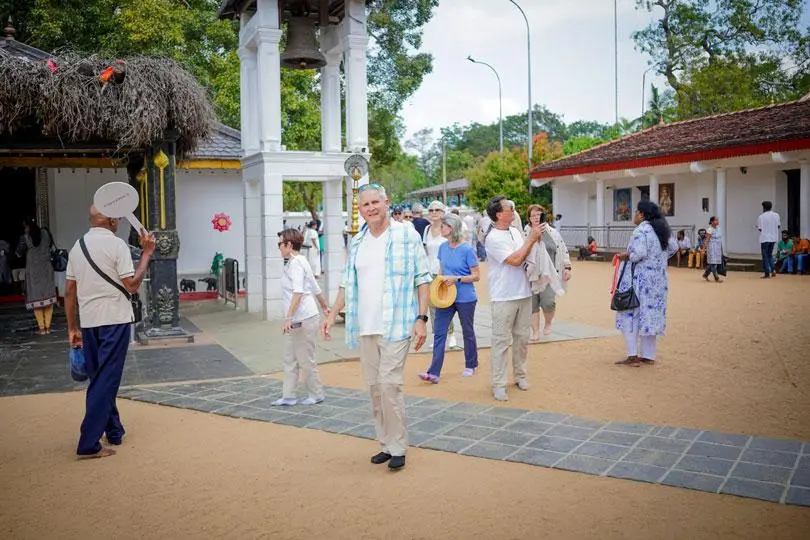
Panama village, located near the borders of Kumana National Park and Lahugala Kitulana National Park, is rich in wildlife, sacred sites, and traditional rural life. Responsible travel here is not optional it is essential.
Modest & Respectful Dress
Panama is home to temples, farming communities, and conservative village families. Visitors are warmly welcomed, but modesty shows respect.
When visiting temples such as Okanda Devalaya and Kudumbigala Monastery:
- Wear clothing that covers shoulders and knees.
- Avoid tight or revealing outfits.
- Remove shoes and hats before entering sacred areas.
- Speak softly and avoid public displays of affection.
- Always ask permission before photographing monks or worshippers.
Light cotton clothing is recommended due to the hot, dry-zone climate.
Elephant Safety Guidelines
Panama lies within an elephant corridor between forest reserves and water tanks. Wild elephants are part of daily life here.
Important Safety Practices:
- Never approach wild elephants for photos.
- Keep a minimum distance of 100 meters.
- Do not feed elephants — it disrupts natural behavior.
- Avoid traveling at night on rural roads.
- If you encounter an elephant while driving:
- Stop at a safe distance.
- Turn off the engine.
- Wait patiently until it moves away.
Elephants in this region roam freely between Kumana National Park and nearby forest reserves, especially during dry months (May–September).
Plastic-Free Travel in Panama
Panama is a rural farming village where waste management systems are limited. Visitors are encouraged to follow zero-waste principles.
Travel Sustainably:
- Bring a reusable water bottle.
- Avoid single-use plastics.
- Carry back all non-biodegradable waste.
- Use reef-safe and eco-friendly products.
- Support local produce instead of packaged imports.
Many village families depend on clean water tanks and farmland. Keeping the environment clean protects both wildlife and community health.